Interphase Interiors

On how to create happier, more productive people


Leave a comment

Collaborate, Concentrate, and Cut Costs

Many companies struggle providing the resources so that its people are productive cross-functionally and individually, but costs are minimized.  Is there a way to hit a sweet spot where people can collaborate together, concentrate on an individual level, and also cut costs? Yes!

The key to get employees to collaborate, concentrate, and cut costs is a mixture of workspace solutions in your organization’s office.  No one wants to be stuck in a cubicle from 8 to 5 every weekday, but people also find it difficult to focus if they are in large open areas all day every day. If you have ever been a part of an organizational buying decision, you also may know that furnishing a huge area of real estate can be costly.  It may be difficult to believe, but the sweet spot can be reached! Here’s how.

Mix of Collaborative Space and Quiet Individual Areas
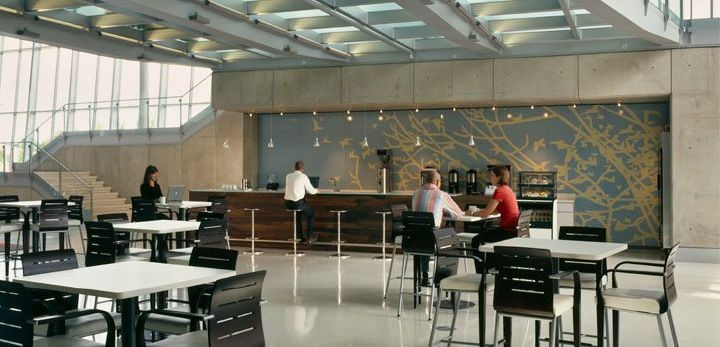
workk                       

Many people may have observed the recent shift toward eliminating cubicles in offices.  The reason behind this trend is evident; collaboration is becoming increasingly important in today’s business world, costs can be cut though space reduction, and more energetic work environments are valued.

This is all good and true, but some people are wary of this shift.  No matter how collaborative of a role one has, individual assignments must also be completed, and the truth is that people want to be able to have peace and quiet to complete them.  Concentration is often compromised in large, open, and energetic areas.  For this reason, many have found that companies must plan for both types of areas.  We recommend a mixture of collaborative café-type areas, as well as quiet areas with glass or mesh partitions to allow a distraction-free option when the time is appropriate.

Invest in Easily Adaptable Components
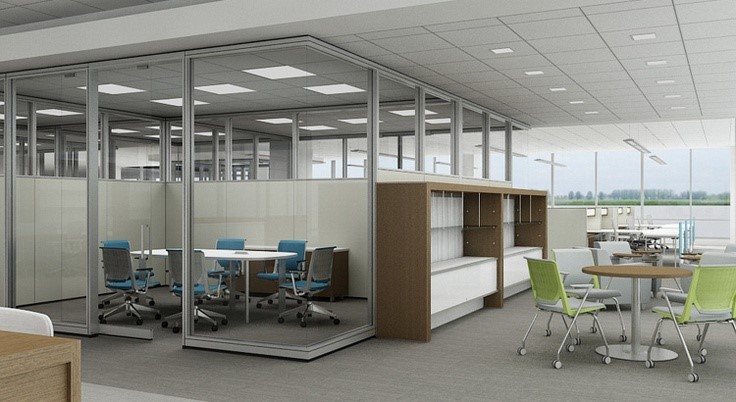
work

Trends in the workplace are changing very quickly, and many organizations find it hard to plan for a work environment that will sustain their business for a long period of time.  Renovating offices or moving buildings is a pain for companies because it involves a lot of planning time, moving time, and of course the bottom line: costs. Is there a way to avoid this?

Placing adaptable components in your workspace allows you to change things around every so often, without incurring huge expenses.  Moveable walls and storage components that fit with a variety of surfaces are currently very popular ways to keep products but still change the look and function of your space.


To find out more about workspace solutions, click here: http://www.interphaseinc.com/

Written By: Chelsea DeBoer


Leave a comment

Why Businesses Should Practice Sustainability

Everything we do as humans has an impact on the environment, either positive or negative, directly or indirectly. Business practices are no exception. Practicing sustainability is important to make sure we have the water and resources we need for survival in the future. Our ecosystem is under attack by industrialization and worldwide practice changes need to be made. Businesses are a sizable part of the carbon footprint we are leaving on our planet, and that is why it is important that companies, not just individuals, take action to reduce environmental impact.

Practicing sustainability goes beyond benefitting the environment- it makes good business sense. Businesses practicing sustainability achieve a wide range of benefits that are often overlooked by those resisting change. These unforeseen advantages may be just the edge needed over the competition for many businesses.

1.       Sustainability yields cost savings

Practicing sustainability ultimately improves your company’s bottom line. In recent years energy efficient opportunities have been found that save a significant amount of money in operational costs, for example switching to LED lighting. Tax incentives are another opportunity to save money of practicing sustainability. There are incentives for utilizing alternative fuels, being energy efficient, operating green buildings, and more.

2.       Sustainability is good for your public image

“Going Green” is great PR and great for your branding. Today people are caring more and more about the organization and people behind the products they use, and people like and embrace sustainability practices. Customers that care about companies’ footprint will be attracted and retained when they otherwise might not be. This holds true with prospect employees for your company as well.

3.       Sustainability keeps you competitive

A 2011 survey* of 3000 global executives revealed that about two-thirds felt that sustainability was necessary to stay competitive in today’s market. Not only do customers care about sustainability- resulting in increasing or maintaining market share, but if you aren’t a leader you will be a follower, and being a follower can be costly. It is important to stay ahead of the trend in sustainability just as you would in other areas of your business.

*To learn more about Sustainability’s Tipping Point, check out MIT Sloan Management Review’s Research Report:

http://c4168694.r94.cf2.rackcdn.com/MIT-SMR-BCG-Sustainability-Nears-a-Tipping-Point-Winter-2012.pdfTo

Written by Kim Kirk


Leave a comment

The Benefits of Unconventional Workspaces


Arcade? Lounges? Couches? These are certainly not the first words that come to mind when you think of an office. And yet, these features are becoming increasingly common in the workplace. The image of the workplace is drastically changing to incorporate collaboration, creativity, and a more enjoyable setting for employees. The workplace environment can increase employee satisfaction, productivity, creativity, and retention; companies can no longer overlook the physical design of their workplaces. Although the workplace design features are infinite, here are five examples of features that can provide the greatest benefits:

1.  Flexible Workplace

haworth_headquarters

Employees no longer need to be confined to one boring workstation. With flexible workplaces, employees can work wherever they want, varying up their daily routine. This provides a “fresh” perspective and feeling for each day, as employees no longer need to feel confined and bored with one workstation. This flexible aspect allows employees to move around throughout the day, collaborating with different colleagues.

2.  Gaming

gaming

Sure, at first glance, gaming seems completely out of place in the workplace. There’s a common belief that games can only serve to distract employees, decreasing their productivity. This, however, is not the case. Benefits of gaming and arcade systems include stress relief, creativity boosters, and fun. Everyone likes a little bit of fun, and just the right amount can help you recruit top talent and increase employee satisfaction.

3.  Bright, Artistic Design

bright design

It has been scientifically proven that color choice can trigger productivity, creativity, and performance. Want to boost creativity? Incorporate the color green into your workplace. Brightly colored offices help to boost employee mood and performance. Additionally, the overall layout of the workplace is critical. A visually appealing and intriguing workspace can help make employees want to come to work everyday and create a positive impression for potential clients, customers, or recruits.

4.  Technological Devices

tech devices

Technology is an integral part of everyone’s daily life, so why not make it an integral part of the workplace? The presence of communal tablets in the office space not only makes information readily accessible, but also encourages employee collaboration, which can help improve performance. Most importantly though, technology makes data portable, and employees are given even more variety in flexible workplaces.

5.  Lounges

lounge

A sense of community is often integral to a successful corporate culture. Lounges not only provide a place of relaxation when employees need stress relief, but they also create a casual environment for inter-colleague interaction. Colleagues can form stronger relationships with one another in lounges—this can ultimately boost collaboration and employee satisfaction.

For more information about creative workplace solutions, check out: http://www.interphaseinc.com/

 Post by Alyssa Mandarakas


Leave a comment

Millennials in the Workplace

2014 is seeing a transitioning workplace. In 2014 Millennials are expected to make up 34% of the workforce, and in 2020 expected to make up 46%*. This is creating huge shift in the workforce and the priorities of a company’s employees, and therefore affects how a company can satisfy and retain those employees. Millennials are unlike any generation before them. They grew up heavily involved in team sports and immersed in technology.  This has shaped the generation to be made up of social, tech-savvy collaborators that are very achievement oriented. They also are well-educated and aware of the large size of their generation, making them very socially-conscious. Baby-boomers prefer working individually and value clear boundaries. They view their managers as experts, while Millennials view them as a coach.

This new wave of will need to be accommodated in the workplace unlike generations past. Millennials want to work for the personal enrichment and fulfillment it gives them, whereas Baby Boomers prioritized salary and compensation over environment.

The traditional workplace environment is suited for the readily-retiring Baby Boomer generation. Cubicles, business formal wear, and a 9-5 schedule is unattractive to Millennials. This new wave of talent will need to be accommodated in the workplace unlike generations past. Companies must adapt to the changing times and start leveraging collaborative, unique work spaces.

To attract and retain the new talent, their interests must be met. Millennials want an environment that stimulates creativity, and one that inspires them to contribute and be involved. They seek a work culture that is relaxed and has open communication. They want a fun, less formal, and comfortable work environment that encourages team work and engagement. Millennials are not fans of the traditional work environment.

As this group begins to dominate the workforce, we see companies that are starting to make efforts to accommodate and draw in this young new talent by reshaping their work environment. Is your company prepared for the influx of Millennials and new talent?

Image         Image


*numbers from Lynch (2008) retrieved here
First image courtesy of a flickr by k gibbons
Second image courtesy of a flickr by Phil Manker

Written by: Kim Kirk

Design a site like this with WordPress.com
Get started